Why Material Testing Should Happen Before You Buy a Conveyor
July 22, 2026
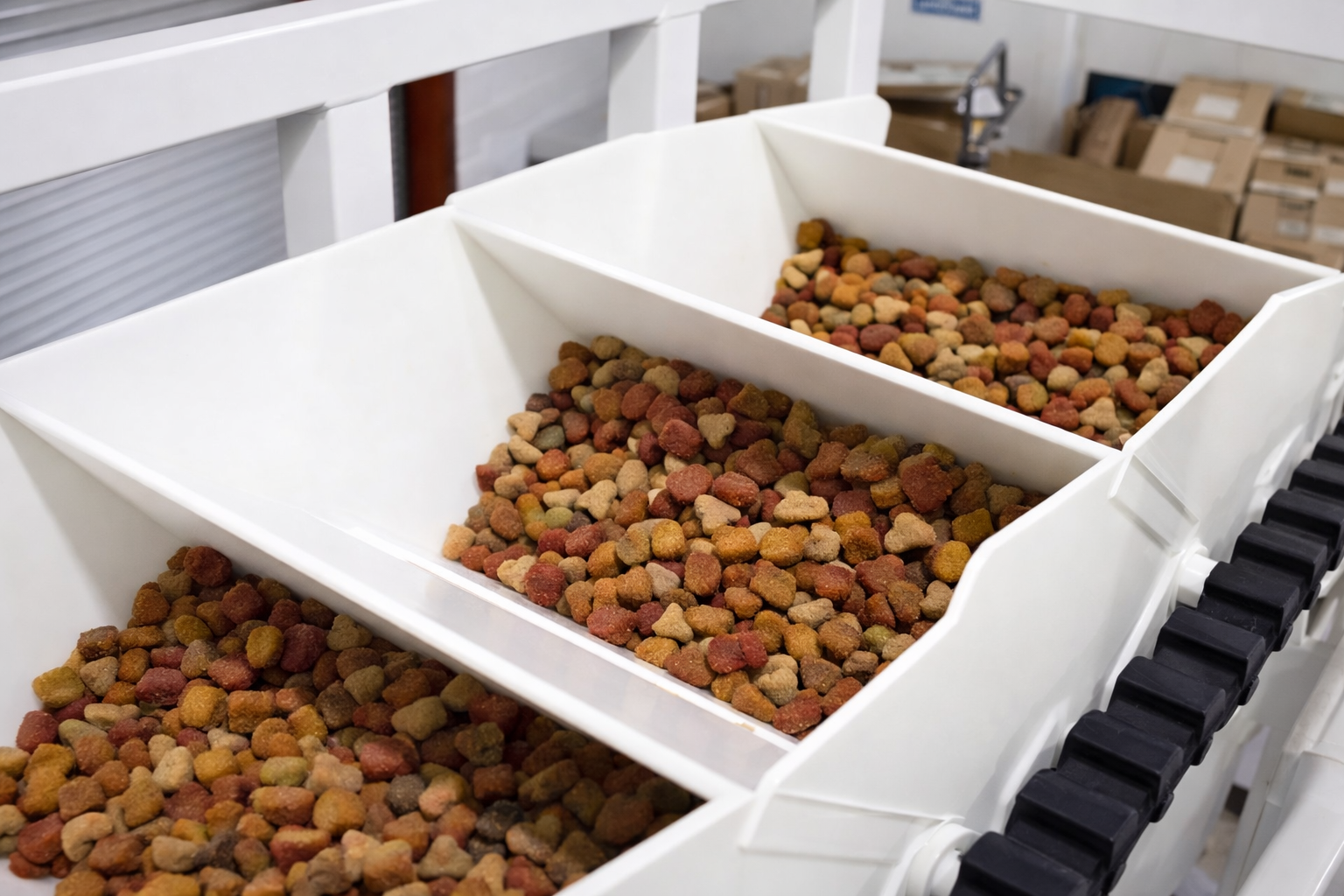
Every bulk material behaves differently.
Two materials may appear nearly identical, but once they begin moving through a conveying system, they can produce completely different results. One flows freely while another bridges, compacts, degrades, or creates excessive dust.
That is why selecting a conveyor based on a brochure or specifications alone can be an expensive mistake.
Before investing in new equipment, material testing provides valuable insight into how your product will actually behave. It reduces uncertainty, minimizes risk, and helps ensure the equipment you purchase is designed specifically for your application.
Even materials within the same industry can behave very differently.
Properties such as particle size, moisture content, bulk density, abrasiveness, temperature, and fragility all influence how a product moves through a conveying system.
For example:
Assuming one conveyor will perform the same for every product often leads to unnecessary operational challenges.
Without testing, equipment selection becomes an educated guess.
The result can include:
These issues typically become apparent only after installation, when making changes is far more expensive.
Testing helps identify potential challenges before they become costly problems.
A comprehensive material test evaluates how your product performs under real operating conditions.
Testing can help determine:
The data collected provides engineers with the information needed to recommend a solution that fits both the material and the production process.
The most successful conveying systems are not selected because they are the biggest or fastest.
They are selected because they match the application.
Testing allows equipment to be designed around your material rather than forcing your material to adapt to standard equipment.
This approach often results in:
Purchasing a new conveying system is a long term investment.
The goal is not simply to move material from one point to another. The goal is to move it consistently, efficiently, and without creating new operational problems.
Material testing removes much of the uncertainty from that decision.
Instead of relying on assumptions, manufacturers can move forward with confidence knowing the solution has been evaluated using their actual product.
At UniTrak, every application begins with understanding the material itself.
Our testing process helps identify potential challenges before equipment is manufactured, allowing our engineering team to recommend the solution best suited for your specific application.
Because difficult materials require more than standard solutions, testing provides the foundation for reliable conveying performance and long-term operational success.
Ready to find the right solution for your material? Contact UniTrak to discuss your application or schedule material testing with our engineering team.
299 Ward Street Port Hope, ON
L1A 4A4 Canada
Dinting Lane Ind. Est. Glossop
Derbyshire SK13 7NU UK

© UniTrak 2026. All rights reserved.


